


A portable padel court is designed for dismantling and relocation, making it an option for events, seasonal venues and market testing. Some systems use a modular or self-supporting base; the need for foundations or anchors depends on the design and site.
Portable or Permanent?
Choose around your operating plan. A relocatable system may suit a venue with a removal date, while a permanent court may suit a long-term club. Compare the proposed base, weather design, installation work and future moving costs rather than the product label.
The standard doubles playing area is 20 × 10 m. Allow additional space for the base, entrances, circulation and installation access. See the court buyer’s guide for the wider specification.
Check the Site First
- Ground: surface material, levels, support capacity and drainage.
- Exposure: indoor or outdoor location and applicable wind conditions.
- Access: delivery route, unloading and safe glass handling.
- Utilities: electrical supply, cable routes and emergency access.
- Permissions: landowner consent and relevant local approvals.
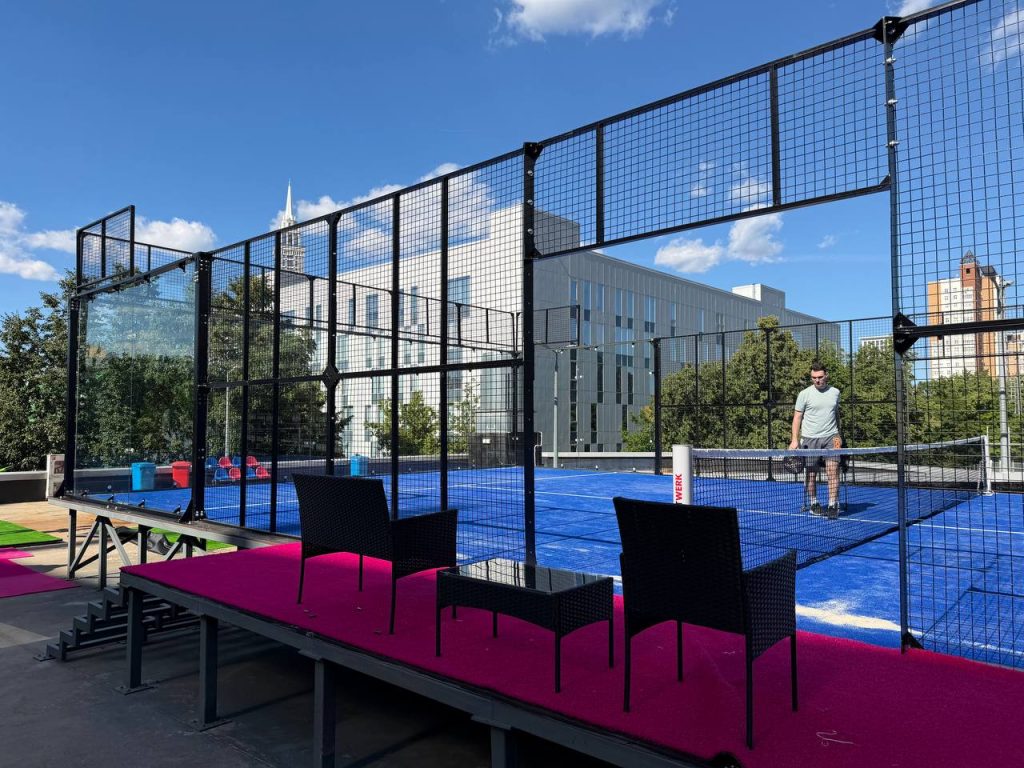
A flat-looking surface does not prove adequate support. Rooftops and raised slabs require review of the court, platform, ballast and installation loads by the responsible structural engineer. Compare the elevated platform approach where relevant.
Assembly and Relocation
Request a site-specific programme for unloading, base installation, enclosure, turf, lighting and handover. Crew, equipment, weather and site readiness affect the schedule; a generic setup time is not an event programme.
For repeated moves, confirm packing, storage, part identification and inspection between uses. Agree who replaces damaged or worn components and who restores the underlying surface. Do not assume a fixed number of reuse cycles.
What Should the Quote Include?
Ask for an itemised scope covering the court kit; base, ballast or anchors; lighting and electrical work; freight and unloading; assembly; and future dismantling, transport and storage.
A kit price is not the installed total. If comparing rental with purchase, use the same destination, operating dates and service scope, and confirm rental availability with the provider. Our installation guide explains the main handover responsibilities.
Quick answers
Does a portable court need a concrete foundation?
Some systems use a modular or self-supporting base. Ground preparation, ballast and anchorage must be confirmed for the selected design and location.
Can it go on any flat surface without permission?
No. Support, drainage, exposure and access need review; temporary status does not establish an exemption from local requirements.
How long does assembly take?
Ask for a programme based on the actual configuration, crew, equipment and site readiness, including inspection and handover.
Send XTZ Padel your site layout, destination and event dates to discuss a suitable configuration.
 English
 Spanish