

Padel is often described as the world’s fastest-growing racket sport, but its story is shorter and more surprising than most people expect. Invented less than 70 years ago, the game has spread from a private estate in Mexico to more than 90 countries, driven by a simple idea: tennis should be easier to learn, more social and more fun to play on smaller courts.
Origins: Mexico, 1969
Padel was invented in 1969 in Acapulco by Enrique Corcuera, a Mexican businessman who wanted to build a court on his property but did not have enough space for a full tennis court. He adapted the dimensions of his land, added walls around the playing area, and borrowed the scoring system from tennis. The original court was smaller than the regulation size used today, and the first “paddle” rackets were wooden — but the core idea was set: a four-walled racket game played in doubles.
The sport quickly spread through the Americas. In 1975, a Spanish friend of Corcuera’s brought the concept to Marbella, Spain, where it was soon adopted by the Marbella Club and the Puente Romano resort. Those venues became the European cradle of padel and helped establish Spain as the country that would dominate the game for decades.
Standardization and the Spanish Boom
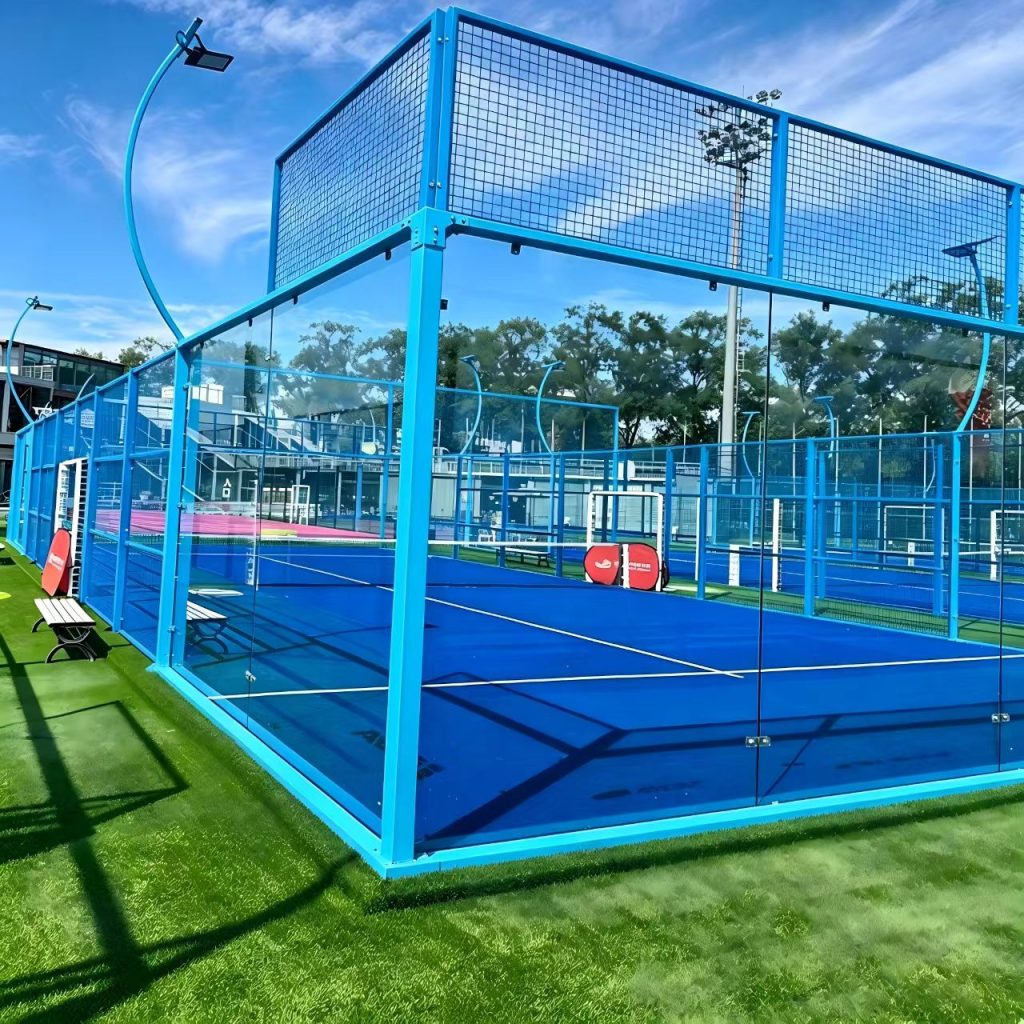
In Spain, the FEP (Federación Española de Pádel) helped formalize the sport in the early 1990s. The standard 20 × 10 m court, the 0.88 m net at center and 0.92 m at posts, the 12 mm tempered glass walls and the artificial turf playing surface were codified into a uniform professional format — the same specification behind every court XTZ Padel builds today, as detailed in our Classic Padel Court series. The padel racket evolved from solid wood to foam-core, then to carbon fiber and advanced composites — making shots faster and the professional game more athletic.
Throughout the 2000s and 2010s, padel grew quietly in Spain, Argentina and a handful of other countries, mostly through private clubs and resort developments. By 2015, Spain alone had more than 10,000 courts, and the World Padel Tour (founded 2013) had turned the professional circuit into a televised spectacle.
The Global Decade: 2015–2025
Around 2015, padel started to expand beyond its traditional markets. The first dedicated multi-court clubs opened in Italy, Sweden, the United Kingdom, the Netherlands, France and the United Arab Emirates. The Qatar Airways-backed Premier Padel tour launched in 2022, bringing unified ranking points and prize money to the men’s and women’s game, accelerating professionalization and media coverage.
The numbers tell the story:
- Spain: tens of thousands of courts, more than 4 million regular players.
- Italy, France, the UK and Sweden: each crossed the 1,000-court threshold between 2020 and 2024.
- The United States, historically a tennis-and-pickleball market, has seen rapid padel club growth since 2022, with new venues opening in Miami, New York, Los Angeles and Austin.
Why Padel Grew So Fast
Padel’s growth is not an accident. It is rooted in design choices that the founders got right:
- Smaller courts mean 2-4 courts fit in the space of one tennis court, which keeps real estate costs manageable.
- Walls in play extend rallies, making the game more forgiving for beginners and more tactical for advanced players.
- Doubles-only format makes it inherently social — a club can put four strangers on a court and they will have fun.
- Low impact and short learning curve attract former tennis players, runners, padel newcomers and older players who want to stay active.
- Spectator-friendly glass enclosures make it ideal for filming, hosting events and venue presentation.
What This Means for Today’s Venues
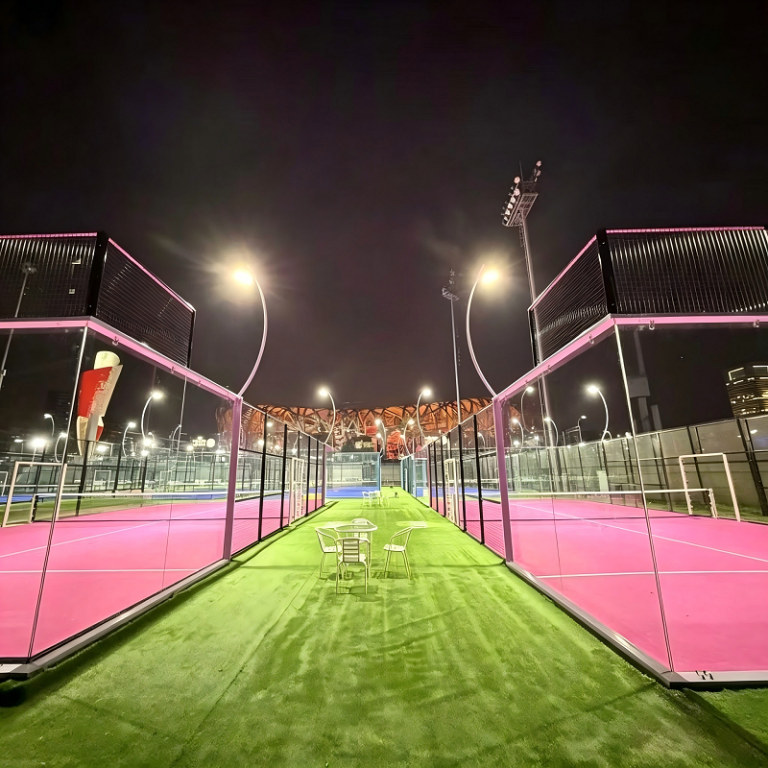
For clubs, schools, hotels and developers planning a new facility, the lesson from padel’s history is straightforward: the sport is no longer a regional niche. Demand is now driven by players, not by speculation. The right court system — a safe, durable and well-designed enclosure — is the foundation of every successful padel business, and it is exactly the kind of project where a professional padel court manufacturer like XTZ Padel can add long-term value.
Curious about the court itself? Read our guide to How to Choose the Right Padel Court for Your Venue to see what makes a court safe, durable and built to last. If you are already planning a build, our Padel Court Project Planning Checklist walks through site survey, foundations, drainage and installation. And for a close look at the product behind XTZ’s recent commercial projects, see XTZ Padel Showcases Classic Court Series for Commercial Venues.
Related reading
- Classic Padel Court for Clubs & Schools
- Installed Courts Around the World
- Contact XTZ Padel
- Padel Court Blog & Industry News
- Padel vs Pickleball vs Tennis
- Padel Rules for Beginners
Who invented padel?
Enrique Corcuera, at his home in Acapulco, Mexico, in 1969.
When did padel arrive in Europe?
In 1975, when a Spanish friend of Corcuera’s brought the game to Marbella, Spain.
How many countries now play padel?
More than 90, led by Spain and Argentina, with rapid growth across Europe, the Middle East and the United States.
What is the regulation padel court size?
20 x 10 m, surrounded by tempered glass walls and artificial turf, with the net set at 0.88 m in the center.
What was the first professional padel tour?
The World Padel Tour launched in 2013; Premier Padel, backed by Qatar Airways, launched in 2022.
Why has padel grown so quickly?
Smaller courts, walls-in-play rallies, a doubles-only format and a short learning curve make padel more social and accessible than most racket sports.