
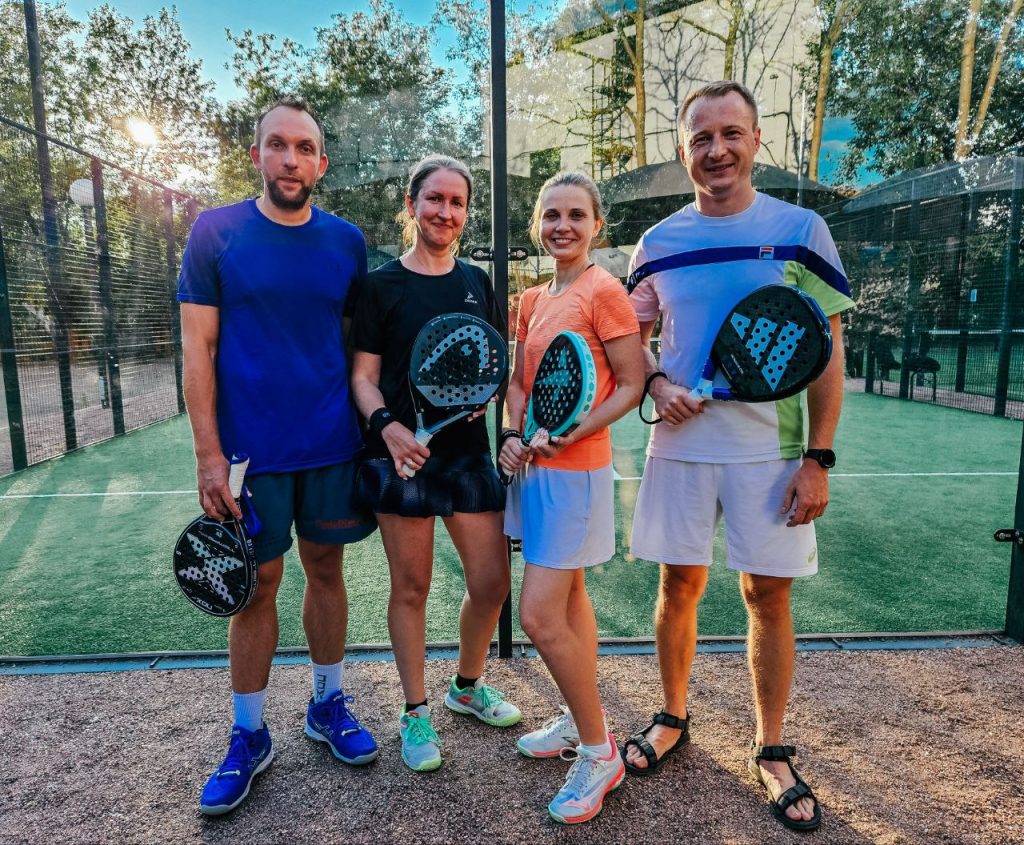
Turnkey padel court installation means one supplier delivers a ready-to-play court — structure, glass, turf, lighting, foundation, and electrical — for a single price and a single point of accountability. It’s the opposite of a FOB kit, where you own everything after the court leaves the factory gate.
Here’s a scene that plays out in padel boardrooms every month: three quotes for the same court spec land on the desk — €24,000, €31,000, and €39,000. Same glass, same steel, same turf. The difference isn’t the court; it’s the scope. One quote is the kit only, one adds installation, and one is genuinely turnkey. Unless you know what “turnkey” actually includes, you can’t tell which quote is cheap and which is honest.
This guide fixes that. It defines turnkey precisely, walks the installation process step by step, breaks down the cost, and gives you a comparison template so you can spot the missing line items before you sign. We build and install padel courts from our factory in Hengshui, China — the factory-to-site process below is our actual workflow, not a theory.
Key Takeaways
– “Turnkey” is not one thing: it can mean court-only, court-plus-installation, or full scope including foundation and electrical — and the same spec can price 40% apart purely on scope.
– The foundation is the single most variable line — typically €5,000–€20,000+, and it’s the item most often quietly excluded from a “complete” quote.
– A court installation runs 3–7 days on site, but the project runs months — manufacturing alone is 20–30 days and concrete needs 14–28 days to cure.
– Factory-direct FOB kits run roughly $11,000–$16,000 for steel, glass, turf, and lighting — landed, installed, and foundationed totals reach $25,000–$40,000+.
– The single best way to shorten your timeline is to run the foundation in parallel with manufacturing — breaking ground the day you order saves weeks.
What Does Turnkey Installation Actually Include?
The word “turnkey” gets used so loosely that it’s nearly meaningless without a definition. Here’s the cleanest way to think about it: turnkey means you turn a key and the court is ready. What’s inside that promise is the scope question — and it’s where quotes diverge.
What a genuine turnkey package includes:
- The court kit — steel structure, tempered glass, mesh, turf, and lighting
- Shipping and customs clearance to your site
- Foundation and site preparation (or a clearly-priced civil works package)
- Installation by a trained crew
- Electrical and lighting wiring
- Final inspection, testing, and handover
What’s often excluded even from “turnkey” quotes:
- Permits and planning approvals
- Demolition or leveling of an existing surface
- Drainage beyond a basic perimeter channel
- Extended warranties or post-handover maintenance
What the owner typically arranges (and should budget for):
- Land and lease
- Permits and local approvals
- Power connection to the site
- Ongoing insurance and maintenance
The honest version: a quote that says “turnkey” but doesn’t list foundation, electrical, and drainage is a kit with a nicer name. The most common phrase we hear from buyers who got burned is “I thought that was included.” Before comparing prices, compare what’s included — line by line.
The Installation Process Step by Step
Here’s the sequence a padel court installation actually follows, in the order it must happen. Skipping or compressing these steps is where budget overruns are born.
- Site survey & planning. Confirm dimensions, access for delivery, power availability, and ground conditions. You can’t engineer a foundation without knowing the soil.
- Design & specification. The manufacturer issues structural drawings, glass and steel specs, turf spec, and a lighting plan. You sign off before production starts — changes after this point cost money and time.
- Permits. Building, zoning, and electrical permits as required. This is the least predictable phase: 2–8 weeks depending on jurisdiction.
- Manufacturing (parallel with foundation). Steel fabrication, glass tempering, and turf production run 20–30 days. The key discipline: break ground on the foundation the same day you order the court, so the slab cures while the steel is being welded.
- Foundation & site prep. Clear, level, install drainage, pour concrete, pre-lay electrical conduit. Concrete needs 14–28 days to cure before the structure goes up.
- Shipping & delivery. Ocean freight plus customs clearance. Europe typically 25–45 days, North America 15–40, Middle East 18–28.
- On-site installation. Steel frame assembly, glass and mesh mounting, turf laying and sand infill, lighting and net installation. This is the fast part: 3–7 days per court.
- Inspection & handover. Check level and plumb, glass seating, turf seams, net height (0.88–0.92 m), lighting (300–500 lux), and drainage — then hand over the key.
The through-line: the installation is short; the project is long. Buyers who plan for the install but not the manufacturing, shipping, and curing are the ones whose “opening day” slips by two months.
Foundation & Site Preparation
If there’s one line item that separates a smooth install from a nightmare, it’s the foundation. The court structure weighs roughly 3.6 tons, and it has to sit perfectly level for the glass to align and the net to run true.
A tennis court slab is not enough. This surprises buyers constantly — a tennis court looks like a natural host for padel, but its slab isn’t engineered for the point loads of a padel enclosure. You’ll almost always need new foundation work.
Two foundation approaches dominate:
- Ring-beam (strip) foundation — concrete poured in an exterior ring to carry the structure’s load. It’s the popular choice, especially where frost is a concern, because it concentrates support where the walls sit.
- Reinforced slab with drainage slope — a full slab, typically with a 1–2% fall toward perimeter drains. Simpler where the ground is already level and drainage is manageable.
Drainage is non-negotiable. A court that puddles is a court that’s closed after every rain and a turf that rots early. Perimeter drains and a correct fall must be built into the foundation, not bolted on afterward.
Flatness is a tolerance problem, not a cosmetic one. FIP requires the playing surface to vary by less than 3 mm over a 3 m straightedge. The glass panels, each CNC-drilled to fit precisely, only seat correctly on a level frame — so a foundation poured a few millimetres out of level telegraphs straight into misaligned glass and a stressed enclosure.
For the exact dimensions your foundation must hit, see our padel court dimensions guide.
Our Factory-to-Site Turnkey Process
Most installation guides are written from the buyer’s side of the fence. This section is written from the factory side, because that’s where the timeline and the quality are actually decided.
We trial-assemble every court before it ships. This is the single biggest quality lever in turnkey work, and the one buyers never see. Each court is fully assembled at our Hengshui factory, fitted, checked, then broken down and packed. A court that ships pre-fitted arrives at your site known to fit; a court that ships as a pile of parts becomes a puzzle with a cracked corner on install day. This is why our on-site assembly runs days, not weeks.
We run foundation and manufacturing in parallel. The moment your order is confirmed, your local contractor should be breaking ground on the foundation while our line welds the steel. Concrete needs weeks to cure; steel needs weeks to fabricate. Done in parallel, they finish together. Done in sequence — wait for the court, then pour — you lose a month or more for no reason.
We ship with the install in mind. The court is packed into containers sized for your site’s access, with glass racked upright in steel cradles and every component labeled to match the assembly drawings. We confirm forklift and crane access before the container arrives, because a court you can’t unload is a court you can’t install.
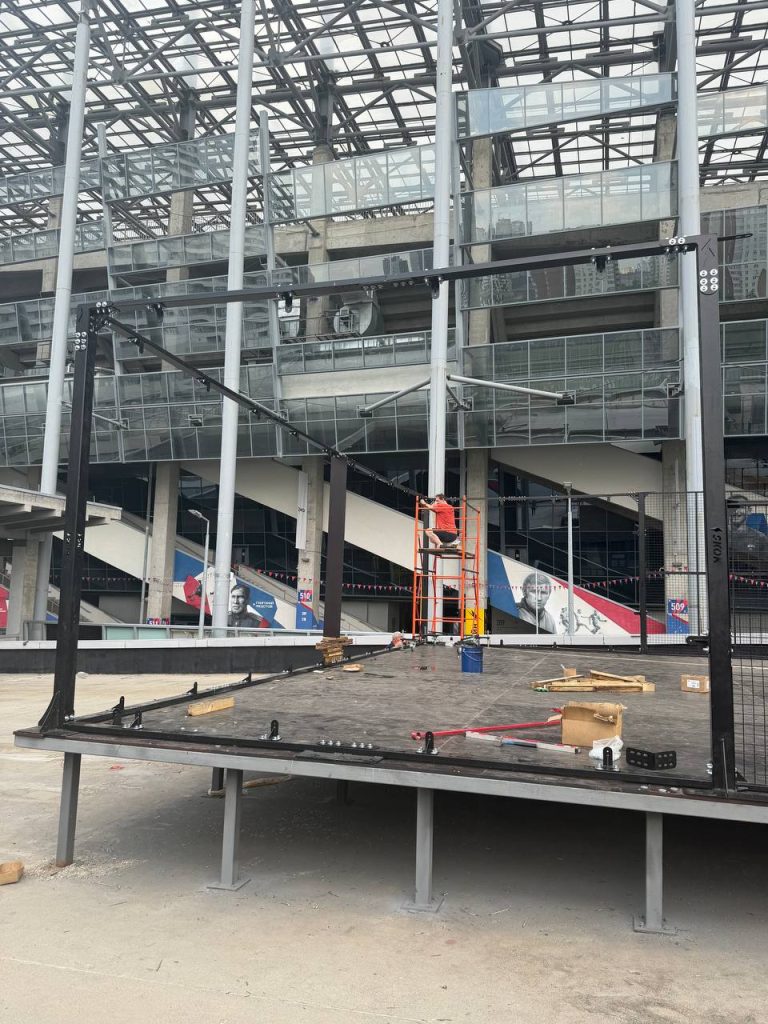
We coordinate the local crew around the glass. Glass installation is where tolerance becomes visible. We provide the installation drawings and technical support, and we either fly in our own technicians or brief a local crew on torque specs, gasket placement, and the 3–5 mm expansion gaps that keep tempered glass from shattering under thermal load. The glass is the component that punishes shortcuts — a bolted-too-tight panel becomes a shattered back wall months later.
Daniel, a developer in Germany, ordered a four-court turnkey project and almost paid for it twice by sequencing the foundation wrong. His contractor wanted to wait until the courts arrived before pouring concrete. We insisted they break ground immediately. The result: the slab finished curing two days before the containers cleared customs, and all four courts were playable in a single week. “If I’d let him wait,” Daniel told us, “we’d have lost the whole season.”
If you’re planning an installation, the timeline conversation is the most valuable one you can have. Talk to our team about your project timeline →
Turnkey Cost Breakdown
What does turnkey installation actually cost, line by line? These are 2026 planning ranges, and they’re why “the court costs €20,000” is a misleading sentence.
| Line item | Typical range (per court) |
|---|---|
| Court kit (FOB: steel, glass, turf, lighting) | $11,000–$16,000 |
| Sea freight + insurance | $2,000–$8,000 |
| Import duty + VAT | 0–25% of landed value |
| Foundation + drainage | €5,000–€20,000+ |
| Installation labor | $3,000–$10,000 |
| Electrical + lighting wiring | $1,500–$3,500 |
| Permits & approvals | $200–$3,000+ |
Add it up and a genuine turnkey court lands between roughly $25,000 and $40,000+, swinging hard with your ground conditions, destination, and whether the manufacturer flies in technicians or uses local labor. The foundation is the wildcard — a flat, competent site is cheap; poor ground needing piling or deep drainage can triple that line.
This is the same story we tell in our padel court cost guide — the kit is the cheap part, and the gap between kit and finished court is where the real money lives.
How to Compare Turnkey Quotes
Three quotes, one spec, a 40% spread — here’s how to tell them apart. Print this checklist and apply it to every quote.
- Is it FOB, CIF, or DAP? FOB means you own everything after the port; CIF includes freight; DAP means delivered to your site. A “cheap” FOB quote is only cheap until you add shipping and duty.
- Is the foundation included — and justified? If foundation is excluded, add €5,000–€20,000+. If included, ask for the geotechnical report that backs the number.
- Who installs, and is their travel included? A quote with “client to arrange installation” is not turnkey — it’s a kit. Real turnkey names the crew and includes their travel.
- Is electrical wired, or “client to arrange”? This $1,500–$3,500 line hides in the fine print more than any other.
- What’s the warranty, and who honors it? A turnkey promise is only as good as the single accountable party behind it. If three suppliers are involved, get one name on the contract.
The rule of thumb: a quote can only be compared when the scope is identical. Strip every quote down to the same list of line items, and the “cheapest” option often stops being cheap.
If you’d rather have one supplier own the whole thing — court, foundation, install, handover — that’s literally what we do. Request a turnkey quote →
What does turnkey padel court installation include?
A genuine turnkey package includes the court kit (steel, glass, turf, lighting), shipping, foundation and site preparation, installation by a trained crew, electrical wiring, and final handover — for one price and one accountable party. Beware “turnkey” quotes that quietly exclude foundation, drainage, or electrical.
How long does padel court installation take?
On-site installation runs 3–7 days per court. But the full project is much longer: manufacturing takes 20–30 days, concrete needs 14–28 days to cure, and shipping takes 15–45 days depending on destination. Running the foundation in parallel with manufacturing is the key to a short timeline.
How much does turnkey padel court installation cost?
A complete turnkey court typically lands between $25,000 and $40,000+ installed — including a $11,000–$16,000 FOB kit, $2,000–$8,000 freight, €5,000–€20,000+ for foundation, and $3,000–$10,000 for installation labor. Ground conditions and destination swing the total hardest.
Can I install a padel court on a tennis court slab?
Usually not directly. A tennis court slab isn’t engineered for the ~3.6-ton point loads of a padel enclosure, so you’ll typically need new foundation work — either a ring-beam strip foundation or a reinforced slab with drainage. The old slab may serve as a base but rarely as the foundation itself.
What’s the difference between turnkey and FOB?
FOB (“free on board”) means the court is loaded onto a ship at the factory and you own everything after — freight, duty, foundation, and installation are your responsibility. Turnkey means the supplier delivers a ready-to-play court for one price. Turnkey costs more because it includes more, and it gives you one accountable party.
Conclusion: Turnkey Is a Scope, Not a Buzzword
Padel court installation isn’t hard to understand once you strip the jargon: it’s a court kit, a foundation, a crew, and a timeline — and the only reason quotes differ by 40% is that they’re counting different things. The buyer who wins is the one who compares line items, not headline numbers.
The two decisions that matter most are the same every time: get the foundation done in parallel with manufacturing, and get one supplier to own the whole scope. Do both and you’ll install on time and on budget; skip either and you’ll pay for the court twice.
For projects that need one party to own design, production, logistics and installation, see our turnkey padel court delivery scope.
If you want one accountable party from factory to handover, that’s the service we sell — design, engineering, production, logistics and installation all sit under one roof in our padel court services. Talk to the XTZ Padel team → and we’ll scope your project honestly — every line item, nothing hidden.