
Choosing a padel court is not simply a matter of selecting the most attractive model. The right system should fit the venue, local climate, player profile, viewing requirements and long-term business plan. A clear selection process reduces redesign work and helps the installation team prepare the site correctly.
When you choose a padel court for a new venue, the decision usually comes down to three inputs: how the court will earn its keep, what the site and local climate allow, and which court type matches both. Answering these before you contact a manufacturer keeps the conversation focused on configuration and cost instead of guesswork.
Start with the venue and business model
A private club, resort, school and tournament venue do not use a court in the same way. Commercial clubs often prioritize visual impact, spectator experience and strong utilization. Schools and community facilities may place greater emphasis on durability, straightforward maintenance and practical investment.
The best court is the one that supports the venue experience while remaining practical to manufacture, transport, install and maintain.
Compare the main padel court types
Panoramic padel court
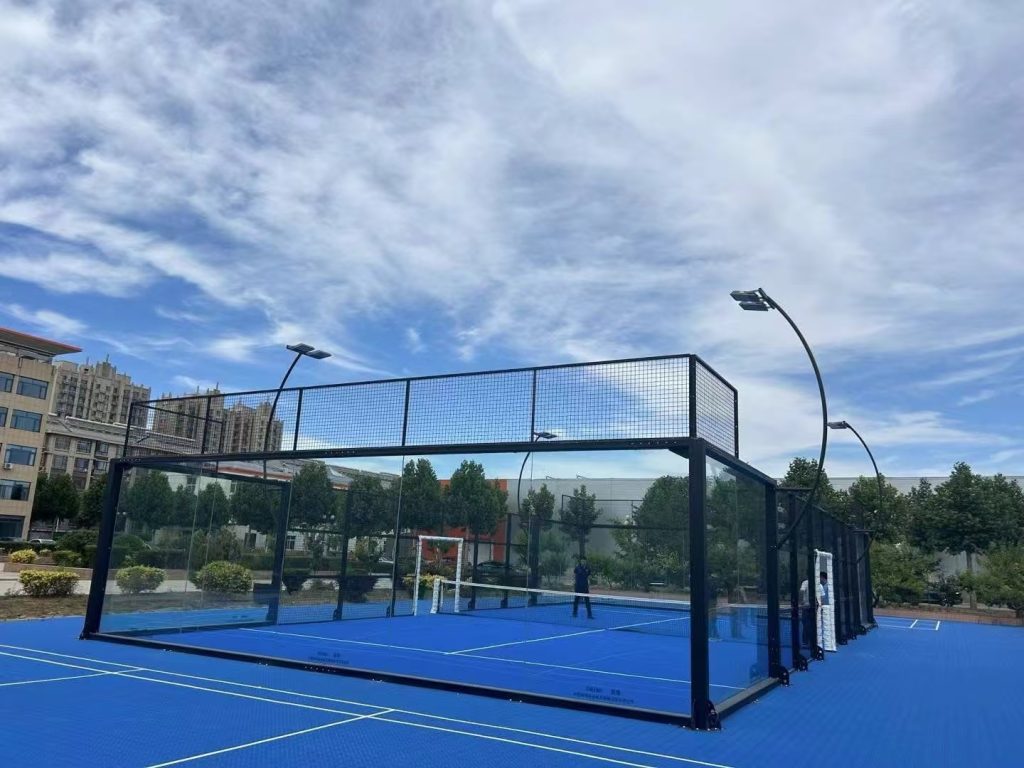
Panoramic courts reduce visual obstruction around the principal viewing areas. They are well suited to premium clubs, resorts, televised events and venues where spectators and architectural presentation matter.
Classic padel court
A classic framed system offers dependable structural performance and practical value. It is a strong choice for schools, training centers, residential communities and facilities that expect frequent daily use.
Covered padel court
A covered solution can increase playable days in regions affected by strong sun, rain or seasonal weather. The canopy, drainage, wind conditions and foundation design should be coordinated as one project rather than treated as separate purchases.
Portable and custom courts
Portable concepts suit temporary venues, events and sites where future relocation is important. Custom systems allow selected colors, branding, turf, lighting and structural details to support a distinctive venue identity.
Narrow the options with a shortlist
Most venues shortlist two court types at most. If utilization and payback drive the project, compare a classic court with a covered option and model how many more playable days a roof adds each season. If the venue is a premium club, resort or televised space, compare panoramic against classic on spectator sightlines. Portable and custom systems enter the picture when future relocation or branding matters more than a fixed structure.
A useful shortlist records the same information for every candidate:
- Clear footprint for the regulation 20 x 10 m court plus safe circulation and access
- Structure and glazing suited to local wind, snow, rain and corrosion loads
- Roof, lighting, turf and branding options, with their effect on cost and lead time
- Transport, unloading and installation sequence for the actual site
When the shortlist is complete, the remaining questions are commercial: warranty terms, packing, documentation and after-sales support. A padel court is a long-term asset, so the supplier’s structural warranty and service record matter as much as the quoted price.
Review the technical environment
- Confirm available dimensions and safe circulation around the court.
- Check wind, rain, temperature and corrosion exposure.
- Understand local foundation and building requirements.
- Plan power supply, lighting positions and drainage early.
- Consider shipping access, unloading equipment and installation sequencing.
Ask for a coordinated proposal
A useful supplier proposal should identify the court configuration, key materials, surface finish, glass, turf, lighting, accessories, packing method and documentation scope. Sharing accurate site information at the start allows the manufacturer to recommend a more realistic system.
If you want one party to own engineering, production, delivery and installation, compare turnkey padel court suppliers on scope as well as price.
XTZ Padel manufactures panoramic, classic, covered, portable and customized court systems. Contact our team with your country, venue type, quantity and target opening date for a practical recommendation.
What factors matter most when choosing a padel court?
Steel structure quality, tempered glass thickness, turf durability and compliance with the official 20 x 10 m regulation dimensions.
How much space do I need for a padel court?
A regulation court is 20 x 10 m, plus clearance around the enclosure for safety, access and maintenance.
Can padel courts be customized to my venue?
Yes. Colors, branding, gates, lighting, roofs and accessories can all be tailored to your venue.
Are XTZ padel courts suitable for outdoor installation?
Yes. Hot-dip galvanized steel and weather-resistant materials are engineered for outdoor use.
What warranty does XTZ provide on the steel structure?
Up to 10 years on the steel structure, with full after-sales support.