
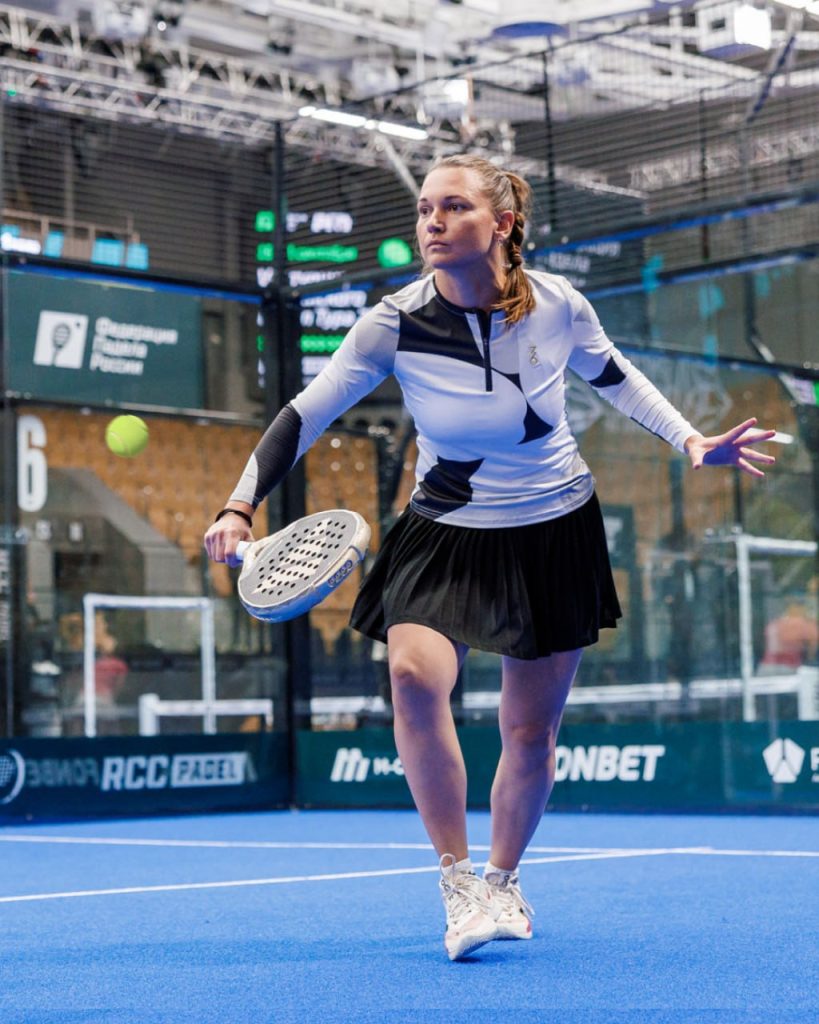
A panoramic padel court is a padel court whose back walls are made of continuous, floor-to-ceiling tempered glass with no rear corner pillars — creating an unobstructed, 360° view of play. It uses 12 mm low-iron tempered glass and a hot-dip galvanized steel frame, and it costs roughly 15–30% more than a classic court.
You’ve seen these courts without knowing the name. Scroll Instagram or TikTok long enough and the same clip keeps appearing: four players rallying inside what looks like a glass aquarium, no steel pillars breaking the sightline, a slow-motion lob ricocheting off a wall you can barely see. In 2025 that image stopped being a niche tournament shot and became a facility spec — clubs, resorts, and hotel groups now ask for “the glass court” by default.
But before you buy one, you have three real questions: what exactly makes a court “panoramic,” what does it cost, and is it actually right for your site — or would a classic court serve you better? This guide answers all three, including the honest part most manufacturers skip. We build padel courts at our factory in Hengshui, China, so what follows comes from the production line, not a brochure.
Key Takeaways
– A panoramic court removes the rear corner pillars, giving an uninterrupted glass back wall; a super panoramic court removes every pillar for a true column-free 360° enclosure.
– 12 mm low-iron tempered glass is effectively mandatory on panoramic courts — with less steel carrying the load, the glass becomes a structural element, not just a window.
– Factory-direct panoramic courts price from roughly $7,500–$14,000 (FOB), with super panoramic running higher and installed/turnkey costs landing between $35,000 and $65,000+ per court.
– Panoramic is a visibility and branding play first — the same playing area as a classic court, but built for spectators, broadcast, and social media.
– Wind is the honest trade-off: panoramic glass handles moderate wind well, but fully column-free super panoramic courts prefer sheltered or indoor sites.
What Is a Panoramic Padel Court?
A panoramic padel court is a variant of the standard 20×10 m padel court where the rear corners are redesigned to remove the vertical steel pillars. The result is a back wall of continuous glass that lets spectators, coaches, and cameras see the entire point with nothing in the way.
The playing surface doesn’t change. Dimensions stay at the International Padel Federation standard of 20 m by 10 m, the net still sits at 0.88 m at center, and the rules are identical. What changes is the enclosure: instead of glass panels framed by steel posts at every corner, the back wall runs glass-to-glass.
That simple change has outsized consequences:
- Sightlines. No rear pillar means nobody at the back of the court is hidden behind steel. Broadcast cameras get clean angles, and spectators sitting behind the baseline see everything.
- The “aquarium effect.” Continuous glass reads as premium. It photographs beautifully, which is exactly why these courts dominate social feeds and why resorts and flagship clubs want them.
- Engineering load shifts. Remove a pillar and the glass has to absorb the structural work that pillar used to do. This is the part buyers rarely hear about — and it’s the whole reason panoramic courts cost more. We’ll come back to it.
The term gets thrown around loosely, so one clarification helps: “panoramic” and “super panoramic” are not the same thing. That distinction matters enough that it gets its own section.
Panoramic vs Classic vs Super Panoramic
Buyers often assume “panoramic” is just “classic but prettier.” It’s more useful to think of three rungs on a ladder of openness — and a corresponding ladder of engineering complexity.
| Factor | Classic | Panoramic | Super Panoramic |
|---|---|---|---|
| Back walls | Glass, framed by pillars | Continuous glass, no rear corner pillars | Continuous glass, no pillars anywhere |
| Corner posts | Yes, at all corners | Yes, but removed at rear corners | None — column-free |
| Glass panels | ~4 (back walls only) | ~18 | ~22–26 |
| Glass thickness | 10 mm or 12 mm | 12 mm (low-iron standard) | 12 mm, often laminated |
| Side walls | Steel mesh | Glass + mesh mix | All glass |
| Wind resistance | High (mesh, full frame) | Moderate | Low — indoor/sheltered preferred |
| Spectator view | Partial | Good–excellent | Unobstructed 360° |
| Relative cost | Baseline | +15–30% | Highest |
The classic court is the workhorse: full steel frame, mesh side walls, glass only on the back. It’s the cheapest to build, the toughest in high wind, and completely legitimate for 90% of clubs. For a deeper look at how the classic structure carries load, see Classic vs Panoramic court structure.
The panoramic court is the middle rung — and the most popular upgrade. You get the signature glass back wall with no rear pillars, but you keep corner structure up front where it’s less visible.
The super panoramic court (also called “ultra” or “full” panoramic) removes every pillar, including the front corners, so glass meets glass at 90° joints. It’s the court you see on the World Padel Tour broadcast: a true fish tank. It’s also the most demanding to engineer, the least wind-tolerant, and the most expensive — which is why it’s the signature choice for indoor flagship venues rather than an everyday outdoor court.
If you’re weighing these against other sports entirely, we compared padel’s footprint and costs head-to-head in our padel vs pickleball vs tennis breakdown.
One more name you will see in supplier catalogs is the crystal padel court. It is not a fourth structural type: “crystal” is a marketing label for the same full-glass back-and-side wall concept as a panoramic court, usually with flush joints and no visible steel posts. So when you compare a crystal vs panoramic padel court quote, look past the name and check three things: glass thickness (a true panoramic system needs 12 mm low-iron tempered glass), whether the posts sit behind the glass, and the structural compensation that keeps a frameless wall aligned. Those details separate a real panoramic system from a re-badged classic court.
Curious what the finished court looks like in the real world? Browse our Panoramic Court specifications →
Key Specifications & Materials
The visible difference between a panoramic and classic court is the missing pillars. The invisible difference is in the materials — and this is where cheap panoramic courts quietly fail.
12 mm Low-Iron Tempered Glass
On a classic framed court, the steel carries the load and 10 mm glass is perfectly sound. On a panoramic court, removing the rear pillars means the glass itself becomes structural. That’s why 12 mm tempered glass is effectively mandatory, and why low-iron (ultra-clear) glass is the expected standard — you’re paying for transparency, so a faint green tint from ordinary float glass defeats the purpose.
Every panel must be tempered to EN 12150 (or SGCC/ANSI Z97.1 for North America), with CNC-drilled countersunk holes, radiused corners, and polished edges so no raw edge ever touches a bolt. We covered the full glass specification — thickness, certification, and why glass really breaks — in our padel court glass guide.
Hot-Dip Galvanized Steel Frame
The frame that remains on a panoramic court does more work than the equivalent steel on a classic court, because it’s compensating for the removed pillars. It should be hot-dip galvanized to EN 1461 / ISO 1461 — not just painted. Galvanizing coats the steel in zinc that sacrifices itself to corrosion, which is what gets an outdoor court past 15 years of weather. A powder-coated frame without galvanizing underneath looks identical for the first two years, then starts rusting from the inside of every weld.
The Structural Compensation Nobody Mentions
Here’s the part that separates serious manufacturers from assemblers. When you delete a rear pillar, the structure has to regain that rigidity somewhere. In a properly engineered panoramic court that compensation comes from:
- A heavier-gauge perimeter frame — thicker wall sections along the top beam and base.
- Extra horizontal support beams at the top and bottom to hold the glass in a continuous run.
- Tighter tolerances — laser-cut and jig-welded components so glass panels align within a millimetre or two, because a misaligned glass run under wind load is a breakage waiting to happen.
This is why a “panoramic court” at a suspiciously low price is usually just a classic frame with the rear pillars yanked out and no compensating engineering. It looks right on day one and develops glass fractures by season two.
How We Engineer Panoramic Courts at Our Hengshui Factory
Every other guide on this topic is written by someone who sells or plays padel. This section is written by people who build the courts — and it’s where the panoramic decision actually gets made.
The core tension of a panoramic court is simple: transparency and structural rigidity pull in opposite directions. More glass means fewer pillars; fewer pillars means the frame works harder. Our job on the factory floor is to reconcile those two forces without letting the court’s price or its safety drift.
We spec low-iron 12 mm tempered glass as the default on every panoramic build, not as an upsell. On a court whose entire value proposition is “you can see through it,” green-tinted glass and 10 mm panels are false economies — they’re the two cheapest ways to make a panoramic court that doesn’t perform like one.
We hot-dip galvanize, then paint. The steel frame is welded in jigs, CNC-machined for hole position, then dipped in a zinc bath to EN 1461 before any powder coating. The coating is for looks and brand color; the galvanizing is what survives a decade of coastal humidity, rooftop sun, and the occasional ball-rack collision. A frame that’s only painted is a rust liability wearing a nice shirt.
We control the tolerance that controls everything else. A panoramic court fails at the corners, where glass meets glass or glass meets steel. If the frame is welded even a few millimetres out of true, the glass gets loaded unevenly and the whole run becomes a stress riser. Our panels are laser-cut and jig-assembled so each glass run sits flat and every panel carries load evenly. That’s also why we insist the panels are CNC-drilled rather than field-drilled — a hole drilled wrong on site is a micro-fissure that becomes a shattered back wall months later.
We’re honest about wind. This matters more than any spec-sheet claim. A panoramic court with its rear pillars removed still resists moderate wind acceptably, and we design the frame to a stated wind load rather than a generic “outdoor rated” promise. A super panoramic court, with glass meeting glass at every corner, is a different animal: it’s engineered for sheltered and indoor sites first. Put one on an exposed clifftop and no amount of galvanizing saves it.
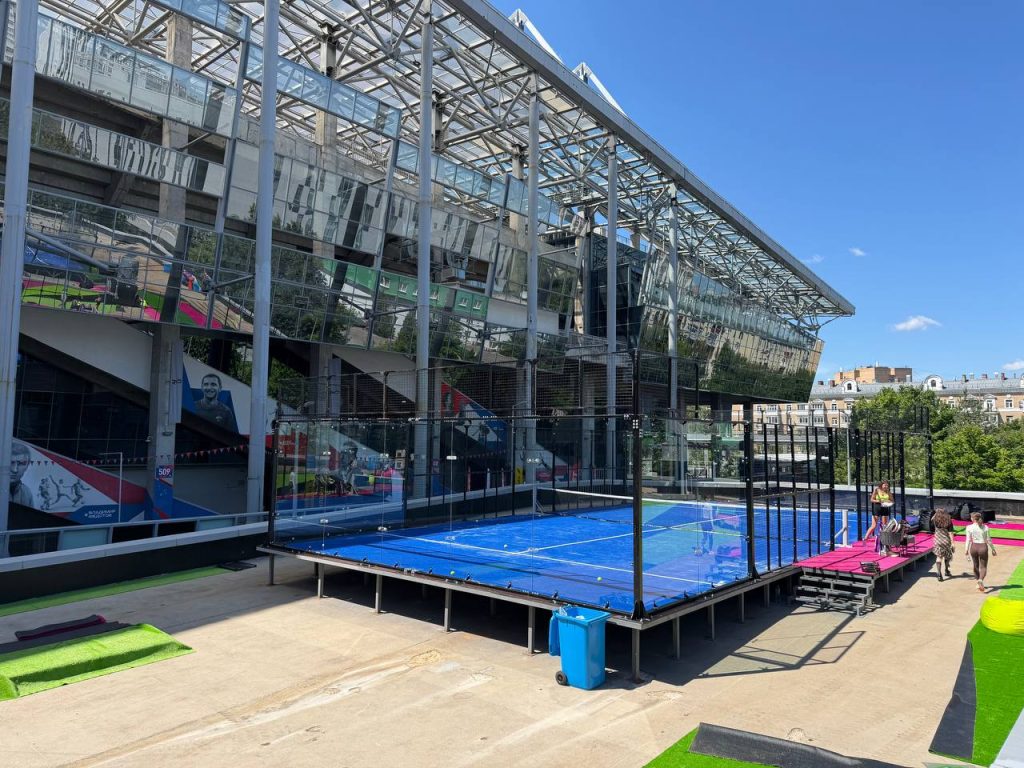
Lucas, a facility manager in Portugal, learned this the concrete way. He ordered a super panoramic court for a coastal site and pushed back when we suggested the classic or standard panoramic instead. Three months after install, a winter Atlantic storm found the column-free corners. The court stood, but two panels needed replacing and he spent the next year watching wind forecasts. He later told us: “I bought the view and got a weather dependency I wasn’t prepared for.” His second court was a standard panoramic, and it’s the one he books first.
If you’re speccing a court now, the honest starting point is a conversation about your site, not a product page. Talk to our engineers about your site →
Is a Panoramic Court Right for Your Club or Resort?
Panoramic courts aren’t universally better — they’re better for a specific job. Here’s how to tell if that job is yours.
When Panoramic Is the Right Call
- You sell the experience, not just the booking. Resorts, hotel groups, and premium clubs live on atmosphere and photography. A glass-walled court is an amenity guests photograph, and those photographs are free marketing.
- You host or want to host tournaments and broadcasts. Clean camera angles are non-negotiable for any serious media or sponsorship play.
- Spectators are part of your product. If you have a bar, terrace, or lounge overlooking the court, pillars genuinely degrade the view.
- You’re indoors or well-sheltered. Controlled environment plus panoramic glass is the best of both worlds — all the view, none of the wind risk.
When You Should Not Choose Panoramic
- You’re on an exposed, high-wind site. This is the single most common regret we see. If your court will face open coastal wind or hilltop gusts, a classic framed court (or a standard panoramic, not a super panoramic) is the sounder engineering choice.
- Budget is the dominant constraint. A panoramic court costs meaningfully more for the same playing experience. Players hit the same balls on the same surface; the premium buys visibility, not better rallies.
- You’re building municipal or high-turnover community courts. These live and die on durability and maintenance cost, not sightlines. The mesh-and-frame classic wins there.
Here’s the test we give every buyer: name the specific spectator or brand outcome you’re buying. If you can’t name one, you don’t need panoramic. If you can — “we want the rooftop court to be the first photo in every guest review” — then panoramic is worth the money, and you should spec it properly rather than cheap out on the glass.
Panoramic Court Cost & ROI
Let’s talk numbers, because “panoramic costs more” is useless without a scale.
What a Panoramic Court Costs
Factory-direct (FOB China) pricing for a panoramic court typically lands between $7,500 and $14,000, depending on glass specification, frame gauge, and finishing. Super panoramic runs higher, often $8,000–$16,000, and classic courts sit at the bottom of that range. These are court-only prices — the kit, not the finished facility.
The installed, ready-to-play number is where the real money shows up. With shipping ($1,500–$6,000 depending on destination), installation ($3,500–$10,000 for labor), plus foundation, drainage, and lighting, a single panoramic court usually lands between $35,000 and $65,000 installed, with super panoramic stretching toward $65,000–$110,000. The spread is wide because “installed” means very different things in different countries.
Where the ROI Comes From
If panoramic costs more but plays the same, the return has to come from the three things it’s actually built for:
- Premium pricing. Clubs and resorts routinely charge more — or justify higher membership tiers — for the “signature” glass court. A court that photographs well books well.
- Marketing leverage. One good image of your glass court on Instagram can outperform months of paid ads. For resorts, the court is a brand asset, not just a court.
- Event and sponsorship revenue. Clean sightlines are what make a court tournament- and sponsor-ready. If events are part of your business model, panoramic is infrastructure, not decoration.
Elena runs a boutique resort in Marbella with a rooftop terrace overlooking the sea. In 2025 she swapped one of her two classic courts for a standard panoramic, placed against the terrace wall so guests watched through the glass. Within six months, the “glass court” was the single most-tagged spot in guest reviews — and her court bookings for that slot went up enough that the premium paid for itself in under a year. Her words: “It’s the only court I never have to discount.”
The flip side is just as real: if your court is a quiet neighborhood facility with no spectators, no events, and no photography ambitions, that same premium buys you nothing but a nicer view of an empty baseline. Get a spec-based quote and we’ll help you model the real numbers →
What is a panoramic padel court?
A panoramic padel court is a standard 20×10 m padel court whose back walls are made of continuous 12 mm tempered glass with no rear corner pillars, giving spectators and cameras an unobstructed view. It’s a visibility and branding upgrade over a classic framed court, with the same playing dimensions and rules.
What’s the difference between panoramic and super panoramic?
A panoramic court removes the rear corner pillars but keeps some corner structure; a super panoramic (or “full” or “ultra”) court removes every vertical pillar so glass meets glass at all four corners. Super panoramic is the most open — and the most wind-sensitive and expensive — of the three formats.
How much does a panoramic padel court cost?
Factory-direct, a panoramic court kit typically ranges from $7,500 to $14,000 (FOB). Installed and ready to play — including shipping, installation, foundation, and lighting — expect roughly $35,000 to $65,000 per court, with super panoramic running higher.
Is a panoramic court better than a classic court?
Not universally. Panoramic courts are better for visibility, photography, broadcasting, and brand impact. Classic courts are cheaper, more wind-resistant, and equally good for actual play. If you can’t name a specific spectator or brand outcome you’re buying, a classic court is usually the smarter choice.
Do panoramic courts need 12mm glass?
Yes, in practice. Removing the rear pillars makes the glass a structural element, so 12 mm tempered glass is effectively mandatory — with low-iron ultra-clear glass as the expected standard. Thinner or tinted glass on a panoramic court is a false economy that leads to fractures and underwhelming sightlines.
Conclusion: The Glass Court Is a Business Decision, Not a Style Decision
A panoramic padel court is the most photographed object in padel for a reason: it turns a 20×10 m rectangle into a stage. If your facility sells atmosphere, events, or a premium experience, the uninterrupted glass back wall is an investment with a measurable return — higher pricing, free marketing, and tournament-ready sightlines.
But the premium only pays off if the court is engineered to be panoramic, not just styled that way. Twelve-millimetre low-iron glass, a hot-dip galvanized frame built to compensate for the missing pillars, and honest advice about wind are what separate a court that photographs beautifully on day one from one that’s still photographing beautifully in year ten.
That last part — the honest advice — is the part a spec sheet can’t give you. Request a quote from the XTZ Padel team → and we’ll tell you, straight, whether panoramic is the right court for your site, your wind, and your budget. We build the courts, so we’d rather you buy the right one than the expensive one.