
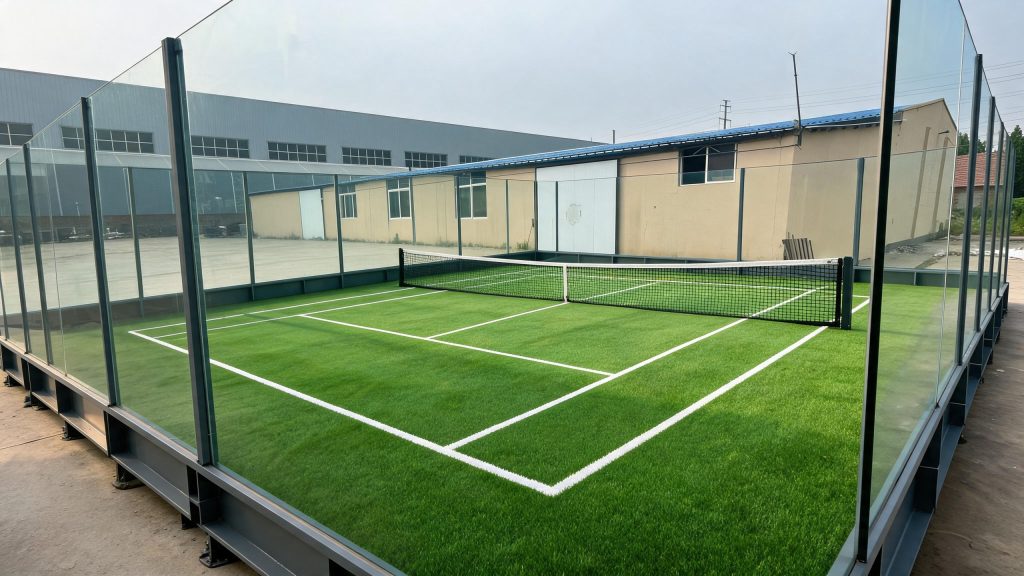
Most padel rallies are lost before the bad shot is ever hit. They are lost when a player picks the wrong option from a good position — a flat smash from the back of the court, a chiquita when the ball is sitting up above the net, or a rushed lob that hands the net straight back to the opponent.
This guide to padel shots explains the four shots that decide most rallies — bandeja, víbola, chiquita and the smash — plus the two defensive tools that turn a losing rally around: the lob and the double-wall read. For each one: what it does, when it becomes available, and the mistake that turns it into a gift for the other pair.
Key Takeaways
– Position before technique. You cannot hit a bandeja from the back of the court — where you stand in the rally decides which shots you own.
– The bandeja is the workhorse overhead. Hit it to keep the net, not to win the point. The víbola is the aggressive version of the same shot, with side spin and a lower, skidding bounce.
– The chiquita is the highest-percentage passing shot in padel: slow, low and aimed at the net player’s feet, it forces a volley up — and lets you move forward.
– The lob is not a surrender. A good globo is the only reliable way to take the net back without attempting a winner.
– Read the walls early. The ball off the back glass comes back faster than beginners expect, and off the side glass it changes angle toward the centre.
Quick answer: what are the main padel shots?
Padel has four core attacking shots and two defensive ones. The bandeja and víbola are sliced overheads hit from around shoulder height, used to hold the net. The chiquita is a slow, low ball played from the back of the court at the net player’s feet. The smash is the finisher, played only when the ball is high and short. Defensively, the lob resets the rally and the wall read — off the back and side glass — converts defence into attack.
The net is the prize: position decides the shot
Padel is a net game. Almost every rally is a fight over who stands 2–3 m from the net and who gets pushed back behind the service line. The rules let the ball come off the glass, which means the defending pair always has a second chance — but only if they are far enough back to use it. Because points are long, the scoring rewards the pair that stays patient rather than the pair that swings hardest.
The two roles: net player and back player
Each pair splits into a net player (volleyer) and a back player (defender). The net player takes the volleys and the overheads. The back player covers the deep ball, plays the lob and the chiquita, and moves up the moment the pair wins the net back. The roles swap constantly during a rally — they are positions, not job titles.
Why you attack from the net and defend from the back
From the net you hit down, so the margins are on your side. From the back you hit up, which is why defending pairs lob rather than drive. Nearly every “which shot?” decision follows from that single fact: am I hitting down or hitting up?
The four core padel shots
Bandeja — the safe overhead
The bandeja is struck beside and slightly above the head with a slicing motion, the racket finishing low, and it is the shot that keeps a pair at the net. It carries little pace on purpose: the ball lands deep and stays low off the glass so the defending pair cannot counter-attack comfortably. The classic mistake is trying to win the point with it — a flat, hard bandeja bounces up into the opponent’s strike zone and hands them the net.
Víbola — the aggressive overhead
The víbola is the bandeja’s aggressive sibling. Same height, same slice, but struck with more racket speed and a wider, downward-brushing path that puts side spin on the ball. The result is a lower, skidding bounce that pulls the defender wide or makes the return awkward. It carries more risk: because the swing is wider, the ball has to be genuinely above the net for it to be worth playing. A control-oriented pala makes the slice easier to repeat — see our beginner racket guide if you are still choosing one.
Chiquita — the low ball to the net player’s feet
The chiquita is padel’s most underrated shot. Played from the back of the court, it is a slow, low, softly sliced ball that lands at the net player’s feet instead of trying to pass them. Because it arrives low, the net player must volley up — and the defending pair can advance. It is the standard way a defending pair takes the net back without needing a winner. Play it when the ball is below the net and you have time to place it, not when you are stretched and running.
The smash — flat, kick, and por 3 / por 4
The smash is played when the ball is high and short, and it ends the point more often than any other shot. Beyond the flat smash, players use the kick smash (heavy topspin, so the ball bounces high off the back wall) and the por 3 or por 4 — a smash angled into the side wall or the back corner so the ball leaves the court before the defender can return it. All three require the ball to be above the net and inside your reach. Attempted from the back of the court, a smash is just a fast ball delivered to the defender’s racket.
Which shot? A simple decision table
| Situation | Shot | Why |
|---|---|---|
| At the net, ball above the net, in balance | Víbola or smash | You are hitting down and can force a weak return or end the point |
| At the net, ball above the net, stretched or off balance | Bandeja | Slice keeps the ball deep and low, and buys time to recover position |
| At the back, ball below the net, short landing spot available | Chiquita | Low ball to the net player’s feet forces a volley up and lets you advance |
| At the back and under pressure | Lob (globo) | The only high-percentage way to reset the rally and recover the net |
| At the back, ball coming off the back glass | Drive or chiquita | The wall has bought you time — do not spend it on a low-percentage pass |
Playing off the walls: defence that becomes attack
Reading the double wall
Most beginners turn their back on the glass and lose the ball. The read is simpler than it looks. A ball off the back glass comes back faster and flatter than expected, so stand 2–3 m in front of the glass, not against it. A ball that hits the side glass before the back wall changes angle and pushes toward the centre of the court — that is the ball to step across for, because it is slowed by the wall and you can attack it.
The lob (globo) — your reset button
A good lob clears the net player’s reach and lands deep, either bouncing off the back wall or forcing the net pair to retreat. It does not need to be a winner; it needs to be unattackable. The mistake is the short lob defended on the run — if you cannot lob high and deep, play the chiquita instead and stay in the rally.
Equipment matters here too. The enclosure is 3 m of tempered glass plus 1 m of mesh above it, and the ball comes off the wall differently depending on the surface you are hitting against — see our padel court glass guide for the 10 mm versus 12 mm difference, and our court dimensions guide for the full spec.
Movement and communication in doubles
Cross-court rotation
After a lob, both players rotate: the lobber moves up, the partner covers the middle. The pair moves as a unit — on the same line, never one player stranded in the middle with a gap behind them.
The cambio (switch) — and when not to do it
A switch is a planned swap of sides, usually after a ball played down the middle leaves both players unsure who takes it. It only works if it is decided early and called loudly. The default is no switch: sides stay fixed unless a middle ball forces the change.
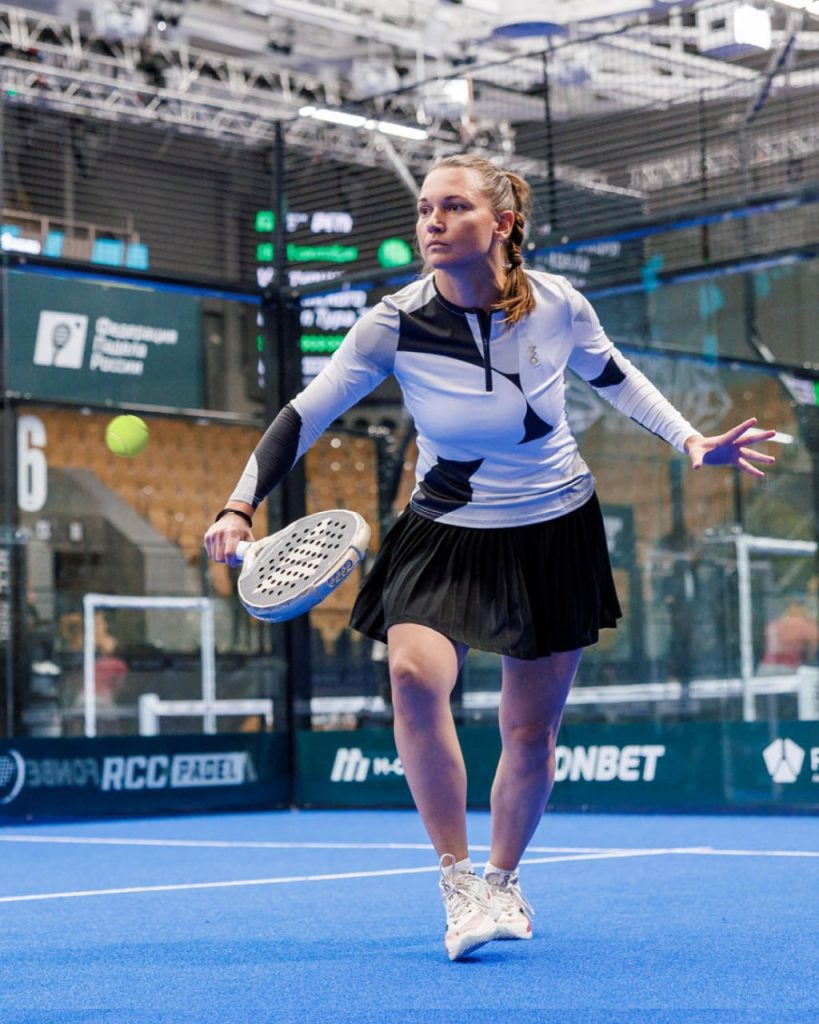
Five mistakes beginners make
1. Smashing from the back of the court
Save the smash for balls above the net. From the back, a chiquita or a lob keeps you in the point and keeps the pressure on the other pair.
2. Standing against the back glass
Move 2–3 m in front of it. You need room to step into the ball off the wall; standing on the glass guarantees a cramped shot or a lost ball.
3. Hitting everything as hard as possible
Padel rewards placement and patience. In club-level rallies the winning shot is usually the third or fourth ball, not the first.
4. Both players drifting into the same half
The middle is the highest-percentage target in padel, which is exactly why good pairs cover it first and make their opponents hit the harder wide balls.
5. Chasing every ball into the side wall
Let the ball come to you. If it is heading into the side glass, wait for it — running at the wall puts you in the wrong position and leaves the middle wide open.
If you are about to play your first session, start with how to play padel: your first session before working on the bandeja — grip, stance and serve come first.
What is the difference between a bandeja and a víbola?
Both are sliced overheads hit from around shoulder height. The bandeja is the control shot: flatter slice, ball kept deep and low, played to hold the net. The víbola uses a wider, faster swing that puts side spin on the ball, producing a lower, skidding bounce that is harder to return — and harder to control.
Which padel shot should a beginner learn first?
The lob and the bandeja. Both are percentage shots that keep you in the rally, and both are needed from the very first session. The smash is the last shot to learn, not the first — it only works when the ball is above the net and short.
When should you play a chiquita instead of a lob?
Play the chiquita when the ball is below the net and you have time to place it at the net player’s feet — it keeps the ball low and lets you move forward. Play the lob when you are stretched, when the net player is already closing in, or when you need time to recover position.
Where should you stand to return a ball off the back glass?
Two to three metres in front of the back glass. Standing against the glass leaves no room to step into the ball, and the ball rebounds faster than most beginners expect when it comes off the wall.
Do padel shots change between indoor and outdoor courts?
The technique does not change, but the conditions do. Wind affects the lob and the smash outdoors, and the temperature alters how the turf and the ball behave. Indoor courts are faster and more consistent, which makes them easier to learn on.
Learning these shots is easier on a court that behaves predictably — glass with the right thickness, a true rebound off the walls, and a surface that does not grab the ball. Take a look at the XTZ Classic Court, or talk to the XTZ Padel Team about the configuration that suits your venue and level of play.
Written by the XTZ Padel Team — a padel court manufacturer working with clubs, resorts and schools on court supply and installation.
 English
 Spanish