Choosing the best padel court system is a structural and commercial decision, not just a product pick. A court that suits the venue type, local weather and usage intensity will outperform a more expensive model that does not. The sections below break the choice into three parts: matching the system to the venue, judging the materials, and qualifying the supplier.
Match the padel court system to your venue type
Every XTZ system starts from the same regulation base, but the configuration that suits a venue depends on how the court is used and who watches.
- Panoramic systems reduce visual obstruction around the main viewing areas, which suits premium clubs, resorts and televised events. See the panoramic padel court guide for the full comparison.
- Classic systems combine dependable structural performance with practical value, a strong fit for schools, training centres and commercial clubs that run continuous daily play. Review the classic padel court range.
- Covered systems add playable days in regions with strong sun, rain or seasonal weather; the canopy, drainage and foundation are engineered as one project. Explore covered and curved roof padel courts.
- Portable systems suit temporary venues, events and sites that may relocate later. The portable padel court guide covers setup and site requirements.
- Custom systems allow venue-specific colours, branding, lighting and structural details while keeping competition-standard play dimensions — full details are in the custom padel court guide.
If you are still deciding between types for a specific property, the step-by-step method in how to choose a padel court for your venue walks through the shortlisting process.
Judge the structure, glass, turf and finish
A durable padel court system earns its cost over years of outdoor exposure, so materials matter more than the initial quote. Compare the following points across every candidate:
- Steel structure — hot-dip galvanized or powder-coated steel resists corrosion, wind loads and UV. Confirm the structural warranty: XTZ offers up to 10 years on the steel structure.
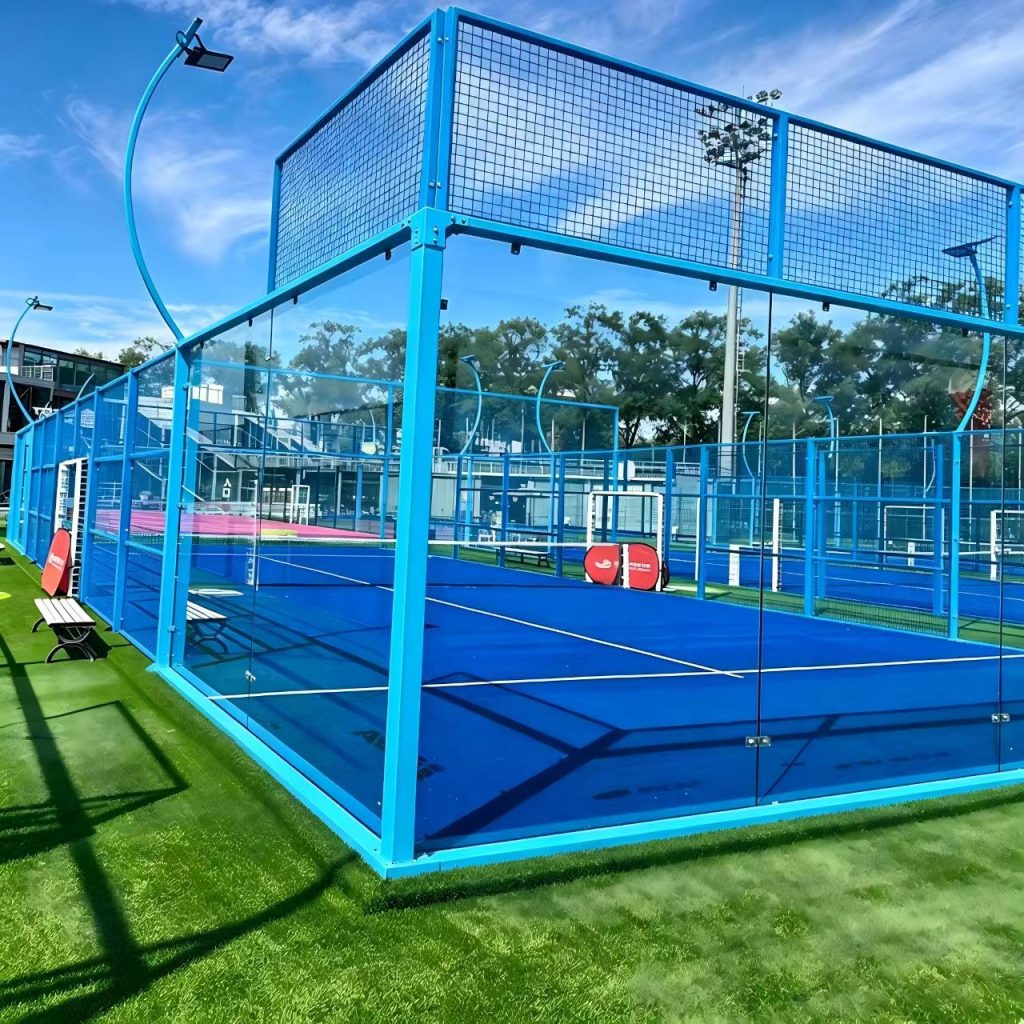
- Glass — tempered safety glass panels meet official specifications for ball rebound and player protection, with mesh above for full containment.
- Turf — competition-grade artificial turf keeps ball bounce consistent and traction reliable for long daily sessions.
- Drainage and lighting — plan drainage direction and lighting positions early, especially for outdoor courts.
- Standards compliance — the court should follow the international 20 x 10 m regulation with official net, glass and turf specifications.
Before comparing prices, check the padel court cost breakdown so the quote is read against shipping, foundation, lighting and long-term maintenance rather than price alone.
Qualify the supplier before you buy
The best padel court system on paper is only as reliable as the manufacturer behind it. Look for a supplier that provides structural calculations for your local wind and snow conditions, professional installation guidance or supervision, spare parts availability and documented after-sales support. For site owners planning from scratch, the padel court installation and turnkey guide explains the delivery phases from order to handover.
Where one supplier should carry the whole scope, our padel court turnkey solutions cover design, manufacture, shipping and installation under a single contract.
XTZ Padel manufactures panoramic, classic, covered, portable and custom systems in one facility, which keeps structural engineering, production and quality control under one roof — a practical advantage when a project needs coordinated delivery.
What makes a padel court system the best?
A best-in-class system combines a certified steel structure, tempered glass walls, competition-grade turf and dependable after-sales support.
Which padel court system should I choose?
It depends on your venue: panoramic for premium visibility, classic for commercial clubs, covered for all-weather play, portable for temporary events and custom for special layouts.
Are XTZ padel court systems competition-standard?
Yes. All XTZ courts follow the international 20 x 10 m regulation with official net, glass and turf specifications.
How long does installation take?
A typical court can be installed within 1-2 weeks on a prepared foundation, with XTZ offering installation guidance and coordination.
What should buyers evaluate before purchasing?
Total cost including shipping, maintenance and accessories, plus material quality, warranty coverage and the supplier’s project experience.