
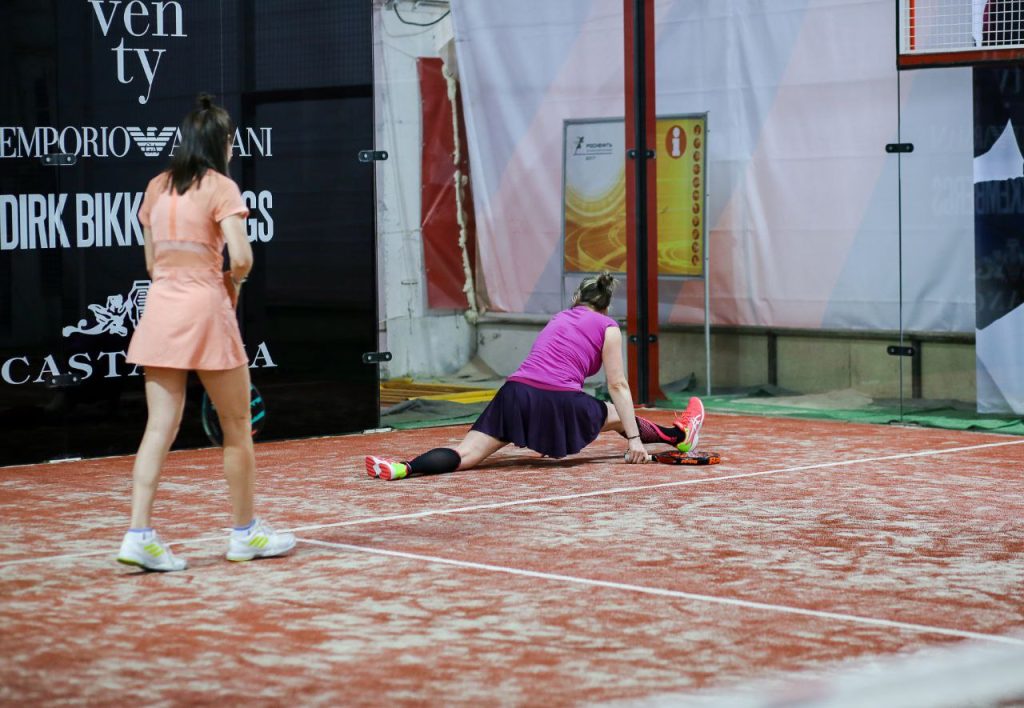
You’ve seen the glass boxes, watched the rallies, and now you’re about to step on court for the first time. Good news: padel is the easiest racket sport to start playing. If you can hold a racket and follow a bounce, you can rally within your first session — this guide is the fastest way to get there.
Here’s what a first session actually looks like: four players, one ball, underhand serves, and walls that keep the rally alive instead of ending it. By the end of this guide you’ll know the court, the grip basics, the serve, the wall rules, and the three mistakes to avoid on day one.
Key Takeaways
– It’s doubles. Padel is almost always played 2v2 on a 20×10 m enclosed court — the smallest beginner-friendly court in racket sports.
– Serve underhand, below the waist, diagonally into the opposite service box — no overhead power serve to learn.
– The ball bounces first, then the wall. After one ground bounce, you (or your opponent) can play it off the glass or mesh.
– Short racket, no strings — grip and control come fast; timing and touch take longer, which is fine.
– Rallies last longer than tennis or pickleball because the walls forgive mistakes — expect real rallying inside 30 minutes.
The Court: What Everything Is
A padel court is 20 m long × 10 m wide, fully enclosed:
- Back walls: 3 m of tempered glass, then 1 m of mesh above — the mesh keeps balls in, the glass is live.
- Side walls: glass in the rear two meters, mesh the rest — you mostly play off the glass on the sides near the back.
- The net: 0.88 m high at center (0.92 m at posts), and you can step over the center line to volley.
- Service boxes: two diagonal boxes marked by the service line 6.95 m from the net.
Walk the court first: know where the glass starts and where the mesh begins. Most beginner mistakes happen next to the side wall, where the mesh ends and the ball dies.
Equipment Basics
- Racket: solid, perforated, ~45 cm, no strings. Beginner models favor fiberglass and thicker cores (38–40 mm) for more forgiveness and power; as you improve you’ll move to carbon. Our best padel rackets for beginners guide breaks down exactly which core and face to start on.
- Ball: looks like a tennis ball but with lower pressure — it bounces lower, travels slower, and behaves differently off glass and turf. Use purpose-made padel balls, not tennis balls.
- Shoes: court shoes with flat soles and lateral grip; running shoes have too much heel roll for the short bursts padel demands.
Hold the racket with a mild continental grip to start — not too tight, knuckles slightly rotated. You’ll adjust as your volleys and bandejas (the high backhand lob) evolve, but don’t overthink grips in session one.
The Serve: Underhand, Below the Waist
The serve is the most beginner-friendly move in padel — there is no overhead mechanic:
- Stand behind the service line (not the baseline — the service line is close to the net).
- Drop the ball and strike it underhand, below waist height, before it bounces (or directly after its first bounce — both allowed).
- The ball must land in the diagonal service box.
- It should bounce off that box, then hit the back glass — squeezing the crest of the box is the target.
Legal serve quirks: no foot over the line until struck; you get two attempts like tennis. And the returner can take the ball off the back glass after the bounce — so a deep serve that reaches the glass is not an automatic winner, which is exactly why padel rallies start friendlier than they look.
The Wall Rules: The Heart of the Game
Here’s the entire wall logic in one line: the ball may touch any wall only after it has bounced once on the ground.
- After your shot bounces, it can hit the back glass, side glass, or come back off the glass to you — and stay in play.
- You may play the ball off your own back glass (a rebound volley or backhand), and off your opponent’s shot that rebounds forward.
- The ball may NEVER touch a wall before bouncing, and never touch the mesh or the metal frame directly (that’s out).
- Over the fence / mesh / ceiling / out of the enclosure = out.
The consequence: pace is punished, placement wins. Smashing into the back glass at full power rarely ends the point — the rebound gives your opponent the easiest volley of their life. Play with patience, use the glass as your partner, and rallies will open up naturally.
Three Beginner Mistakes (And the Fixes)
- Bashing the ball. Beginners swing like they’re playing tennis. Fix: shorten your swing — think “control, not power.” The walls do the work; your job is direction.
- Hugging the side wall. Standing against the glass leaves you no reaction room, and a rebound catches you. Fix: play from the middle-back, take the ball early, and only move to the wall when the ball forces you there.
- Forgetting the opponent’s rebound. You smash, the ball rebounds off the back glass, your opponent smashes it back into the open court. Fix: after any attacking shot, recover to the center-court position (the “T”-like position) and expect the ball to come back.
Bonus mistake: forgetting to communicate with your partner. Doubles is half positioning, half talking — call the ball, don’t both chase it.
Your First Session: What to Expect
In 60 minutes you’ll have: served legally (the underhand motion clicks fast), rallied past 10 hits, discovered your favorite rebound angle off the back glass, and laughed at least once when a “winner” came straight back at you. That’s the padel hook — and why retention is above 90% for first-time players, the highest in racket sports.
Want the full rule book? See our guide to padel rules for beginners for scoring, faults, and wall specifics, or the dedicated padel scoring system explainer for 15-30-40, sets and tie-breaks. And if you’re thinking about building a court so this becomes a weekly habit, start with padel court dimensions or talk to our court specialists about your space.
How do you play padel for beginners?
Padel is a doubles-first racket sport on a 20×10 m glass-enclosed court. You serve underhand below the waist into the diagonal box, the ball must bounce once before touching the walls, and after the bounce either player can play rebounds off the glass. Learn the serve and wall rules, and you’re rallying within your first session.
Can you hit the ball off the walls in padel?
Yes — but only after the ball has bounced once on the ground. After that bounce, you (or your opponent) can play it off the back or side glass, and it stays in play. The ball may never touch a wall before bouncing, and the mesh/frame is always out.
Do you serve underhand in padel?
Yes — the serve is always underhand, struck below waist height, into the diagonal service box. It must bounce in the box before touching the back glass, and there’s no let on net contact — the point simply continues.
Is padel easy to learn?
Yes, the easiest racket sport to start. The underhand serve, short solid racket, low-pressure ball, and forgiving glass rebounds let most beginners sustain rallies within one to three sessions — far faster than tennis.
What equipment do I need to start playing padel?
A padel racket (solid, ~45 cm, no strings — fiberglass with soft-medium EVA core for beginners), purpose-made padel balls, and court shoes with flat soles and lateral grip. That’s it — most clubs rent or lend rackets for your first session. — Author: XTZ Padel Team — Meta Title: How to Play Padel: Beginner’s Guide & First Session Tips Meta Description: How to play padel: court basics, the underhand serve, wall rules, and three beginner mistakes to avoid — your fastest path to a real rally. Primary Keyword: how to play padel Secondary Keywords: padel for beginners, how to serve in padel, padel wall rules, padel basics, first time playing padel URL Slug: /archives/257 Word Count: 1,160 —