
What Is Padel?
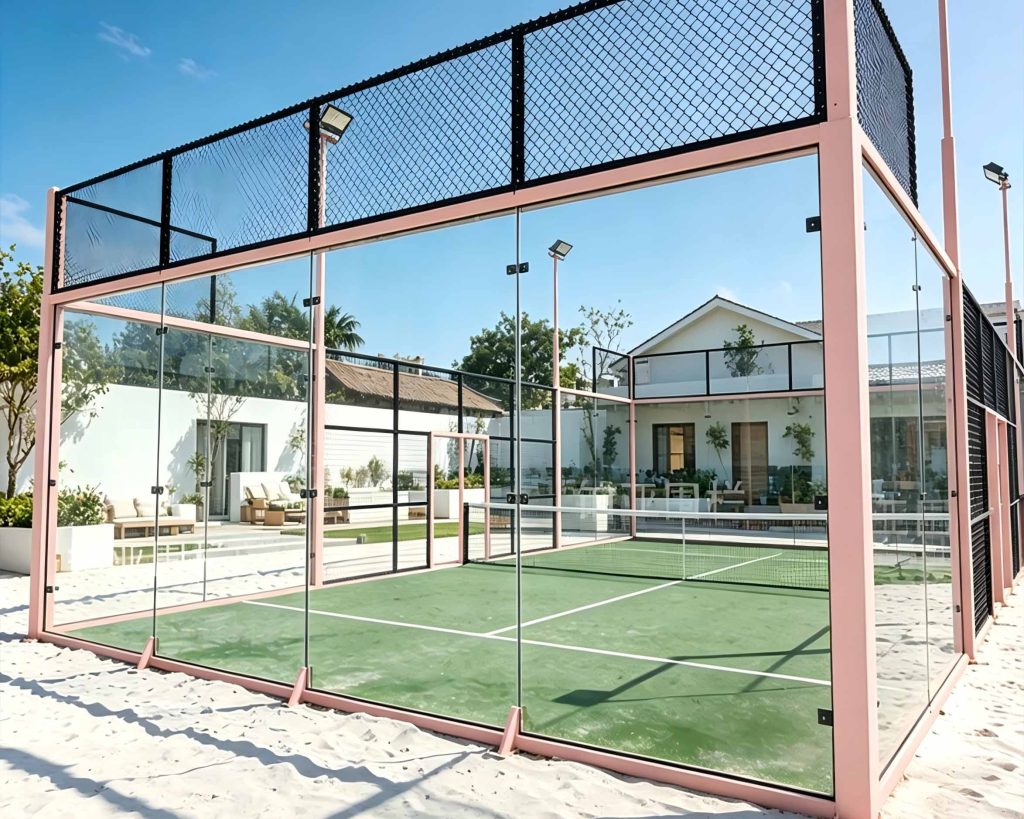
Padel is one of the fastest-growing racket sports in the world, combining elements of tennis and squash. It is typically played in doubles on an enclosed court surrounded by glass walls and metal fencing. Unlike tennis, players can use the walls after the ball bounces, creating longer rallies and making the game more dynamic and exciting.
With its easy learning curve, social atmosphere, and fast-paced gameplay, Padel has become increasingly popular across Europe, South America, the Middle East, and Asia.
Essential Padel Equipment
Getting started with Padel doesn’t require much equipment. Here are the basics you’ll need:
1. Padel Racket
Unlike a tennis racket, a Padel racket has a solid surface with perforated holes instead of strings. Most rackets are made from carbon fiber or fiberglass with an EVA foam core.
There are three main racket shapes:
- Round: Excellent control and forgiveness, ideal for beginners.
- Teardrop: A balanced combination of power and control.
- Diamond: Designed for advanced players seeking maximum power.
2. Padel Balls
Padel balls look similar to tennis balls but have slightly lower internal pressure, resulting in lower bounce and better control during rallies.
3. Court Shoes
Wear shoes specifically designed for Padel or tennis. They provide the grip, stability, and lateral support needed for quick directional changes.
Basic Rules of Padel
Match Format
Padel is usually played as doubles (2 vs. 2).
Most matches follow a best-of-three sets format, using the same scoring system as tennis:
- 15
- 30
- 40
- Game
Serving Rules
The serve in Padel differs from tennis:
- The ball must be hit below waist level.
- The server must let the ball bounce once before striking it.
- Only underhand serves are allowed.
- The serve must land diagonally in the opponent’s service box.
If the served ball hits the glass wall before bouncing in the correct service box, it is considered a fault.
Basic Padel Strokes
Forehand
The forehand is the most fundamental shot in Padel.
Key techniques include:
- Turn your shoulders sideways.
- Prepare the racket early.
- Transfer your weight from the back foot to the front foot.
- Swing smoothly through the ball.
As a beginner, focus on consistency rather than power.
Backhand
The backhand is used frequently during Padel matches.
Tips for improving your backhand:
- Use both hands if it feels more comfortable.
- Keep the racket head slightly above the ball.
- Rotate your body to generate power instead of relying solely on your arm.
Volley
Since controlling the net is a major part of Padel strategy, volleys are essential.
For effective volleys:
- Keep the racket slightly in front of your body.
- Minimize your backswing.
- Let the incoming ball’s pace do most of the work.
- Focus on placement instead of power.
Smash
When your opponents hit a lob, you have an opportunity to attack with a smash.
A successful smash is not only about hitting hard. Good players also consider:
- Placement
- Angle
- Using the glass walls to create difficult rebounds
Learning to Use the Glass Walls
One of the most unique aspects of Padel is playing with the glass walls.
Many beginners hesitate to let the ball reach the back wall, but learning to use the rebound is an essential skill.
Follow these steps:
- Judge the speed of the incoming ball.
- Allow it to rebound off the glass.
- Move into position.
- Strike the ball at the optimal contact point.
Practicing wall rebounds will significantly improve your overall game.
Common Beginner Mistakes
1. Trying to Hit Every Ball Hard
Padel rewards control and precision more than raw power.
2. Staying Too Far Behind the Baseline
Players should constantly adjust their positioning and move forward whenever possible.
3. Ignoring Teamwork
Padel is a doubles sport. Communication and coordinated movement with your partner are just as important as individual technique.
4. Avoiding the Glass Walls
The walls are not obstacles—they are part of the game. Learning to use them effectively is one of the biggest differences between Padel and tennis.
Training Tips for Beginners
Aim to practice two to three times per week, with each session lasting between 60 and 90 minutes.
A balanced training routine should include:
- Serving practice
- Forehand and backhand consistency drills
- Volley exercises
- Wall rebound practice
- Doubles positioning and communication
- Match play
Regular practice will improve your consistency, movement, tactical awareness, and confidence on the court.
Basic Padel Strategy
Once you’ve mastered the fundamentals, start applying simple tactical concepts:
- Take control of the net whenever possible.
- Avoid giving your opponents easy lobs or attacking opportunities.
- Hit toward open spaces instead of directly at your opponents.
- Maintain good positioning with your partner by moving together.
- Use the walls strategically to turn defense into offense.
Smart positioning and teamwork often make a bigger difference than powerful shots.
Final Thoughts
Padel is an exciting, social, and highly accessible sport that players of all ages and skill levels can enjoy. Whether you’re completely new to racket sports or have experience in tennis, you’ll find Padel easy to learn and incredibly rewarding.
By understanding the basic rules, developing solid technique, and practicing consistently, you’ll quickly build confidence and improve your game. Start with the fundamentals, embrace the unique use of the walls, and most importantly, enjoy every match as you begin your Padel journey.
